


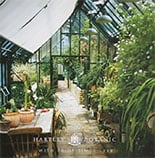

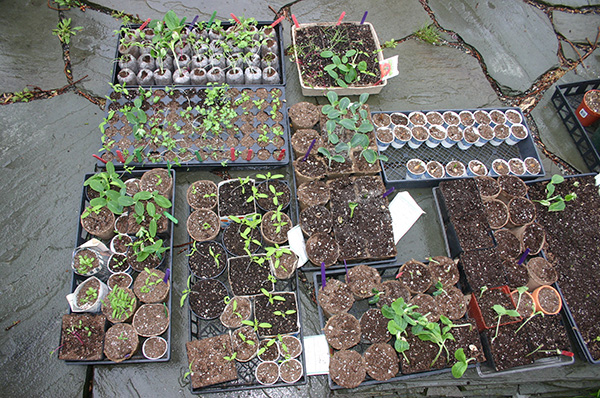
It’s warming up in Rhode Island, but the wind is still very cold off the ocean because the ocean water is only about 43°F (6°C) in late April. This cold early springtime breeze keeps my garden temperature roughly two weeks behind inland areas. To counter this issue, I start most seeds in my basement and move the seedlings to my greenhouse, where they grow to a height of 6 to 8 inches (150 to 200 mm) before being planted outdoors in mid to late May. But before this outdoor planting can occur, the garden beds must be prepared. These two tasks – bed preparation and planting – are ones I’ve developed methods for tackling after many years in New England.
In my earliest days here, I rototilled the soil, with my welly boots tramping it down as I trudged behind the tiller. But now that I’ve gotten garden religion, I hand-till the weeds and simply rake over my 4-foot wide raised beds, keeping the soil uncompacted by never walking on it and making it easy for plant roots to grow. I’ve also increased the soil depth with all the manure, seaweed, and compost I’ve added over the years, and I’ve eliminated many rocks by initially screening the entire garden some 40 years ago. Still, because this is New England with its extreme freeze/thaw cycles, stones in the glacial till below the soil are constantly being pushed slowly toward the surface, making it virtually impossible to keep the garden permanently stone-free.
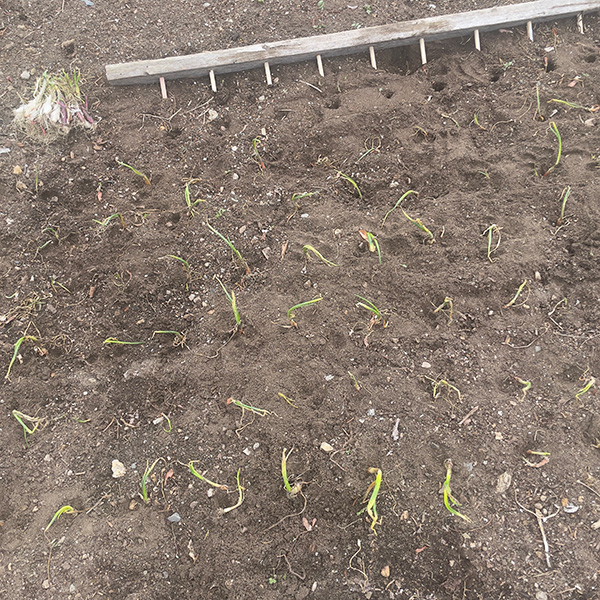
When it comes to planting, I prefer to plant in grids, the size of which depends on how closely spaced the plants can be. Onions, for example, depending on variety, get planted 4 to 6 inches (100 to 150 mm) apart in both east-west and north-south directions. Leeks require more space, so their grid puts them about 8 to 9 inches (200 to 225 mm) apart. As the leeks grow, I add compost and mulch for nutrients and to keep the leek’s lower part white for making vichyssoise soup.
I’ve also found I can use intercropping to advantage when different plants take different times to mature. I set lettuce, for instance, in 8-inch grids, but because lettuce takes only 30 to 45 days to harvest, I can set carrot seeds between the lettuce plants. The carrots require up to two weeks to germinate and another 100 to 120 days to reach full size, so by the time the carrots are ready to harvest the lettuce has long ago been picked.
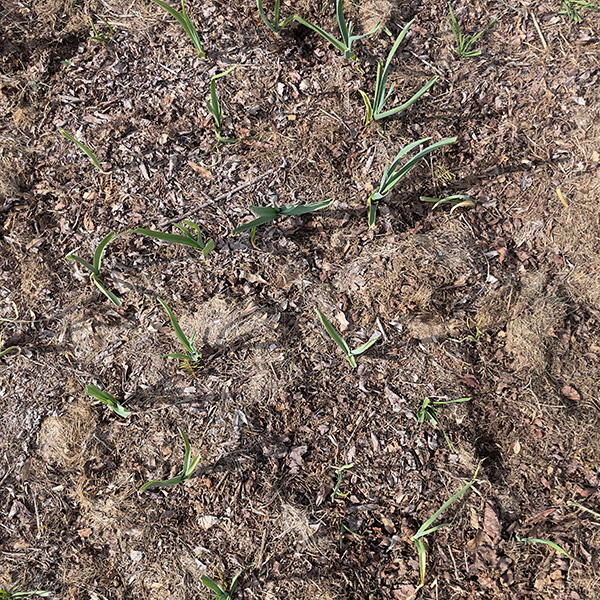
My cabbage plants are treated similarly. They start out small, but depending on variety, they can grow huge, sometimes up to 4 feet (1.3 M) across. Their maturation requirement, however, is 60 to 100 days. This gives me time to grow faster-maturing plants, such as spinach and arugula, in between the cabbages. These greens will be harvested well before the cabbage literally spreads its leaves.
Another planting approach I’ve adopted is to accept the realities of nature. One example is putting dahlias in my fenced-off garden beds rather than in more decorative locations. This is due to acceptance that the deer will get fat on my plants. When I grew dahlias outside the garden fencing, deer ate all the dahlia even though the plants were sprayed with deer-repellant and cayenne pepper to within an inch of their lives. The bamboo stake next to each tuber didn’t deter the deer either. This was a food that the animals clearly enjoyed. My point here is that sometimes the best solution is to admit that nature will be the victor and find ways to acknowledge this fact while still growing the plants you desire. In fact, accepting nature is a fundamental lesson in all aspects of gardening. It importantly refocuses the gardener’s efforts from trying to defeat or control nature to working with nature and all the many things that it entails.