


Studying natural history may open young minds – but if it’s to win their hearts, they need the chance to get their hands dirty.
A huge, positive and potentially generation-shaping shift is underway in the world of education: there’s to be a new GCSE (General Certificate of Secondary Education) in natural history. Students study for GCSEs at 15 or 16; they involve, depending on the subject, theoretical, investigative and practical elements.

As our climate and living world shift to a never-normal-again state, this is indisputably good news; future generations will have to live their lives under vastly altered conditions to the ones my generation grew up in. Understanding and appreciating how our shared, pressured biosphere works – and how we can adapt to profound ecological change, while seeking a more harmonious relationship with our planet to achieve that – is the urgent mission of our time. This new GCSE (it’s been gestating since 2011) is a key element of that mission.
But in all the fanfare announcing its arrival – it is currently out for public consultation – I was looking for something that’s not had a mention yet: gardening.
When I had to pick my own GCSE subjects, in the mid-1970s, we didn’t have natural history as an option. I chose to study French at first, over the subject that I eventually took – phew – which helped to steer the course of my career and, in many ways, my life: rural science (we shorthanded it to ‘rural studies’). One of my early mentors was my form and rural studies teacher, the late, great Bernard Salt. (His brother was Len Salt, then head gardener at Birmingham Botanical Gardens, where I started work as a student gardener at the age of 16.)
Rural studies lessons were memorable, wonderful times – especially when clay plant pots whizzed over our heads and shattered on the back wall of the classroom; how else to rouse dozing teenagers on a Friday afternoon? It worked (imagine the hullabaloo now). But I was roused by the subject itself; we had incubators in our classroom, then chicks, which we reared to slaughter, learning about food and its origins along the way. We did the science about soil, weather – all the basic stuff. But we had something else too, a catalyst that led me to where I am today: a school garden. A big one.

Here (alongside the chickens) we learnt about growing food from scratch, from seed to harvest – every crop, including flowers, that you can think of. We didn’t just dabble at it; we did it, every week. We each had our own plot to cultivate and nurture – sometimes competitively! We observed, we recorded, we watched, we reaped, we succeeded and failed. We learnt about the natural world through gardening, and became unquenchably curious about it.
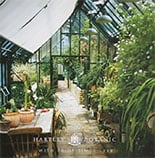
Soil got under our nails, it rained, it shined, our uniforms got muddy. We also had a big school greenhouse, which supplied many of the plants for our plots. We were learning about science, ‘rural’ stuff, the natural world and food production, alongside hands-on gardening. I loved it. It was one of the few subjects I excelled at – so much so that I gained a special dispensation to swap sports periods for tending the school garden (I loathed sport and PE).
My gardening didn’t stop at the school gate. We had a huge garden at home, too, and I’d been gardening since I could walk. My dad built a greenhouse. We grew mountains of vegetables and cut flowers, which we sold at our front gate. We stored vegetables, we salted runner beans, we blanched and froze other produce. There was loads of food to eat. I sprayed aphids with long-gone malathion. I often had to be dragged indoors at teatime.
I kept tumbler pigeons (they flip backward somersaults in mid-air) and we had a dog, Pip, and a tortoise; we looked after other animals. We lived out in the countryside. I collected bird’s eggs, walking miles in search of them. I became obsessed with identifying wild flowers, taking keys and guides with me everywhere, and devoured every programme presented by botanist David Bellamy. I tickled trout in the stream at the bottom of our garden, and stalked water voles on its banks. I dissected the coughed-up pellets of kestrels, glueing the tiny jaw bones of shrews and the glistening carapaces of beetles they’d eaten to card to display my findings.
My curiosity for nature was ablaze. My gardens, at home and at school, and the countryside – nature – were where I learnt about and came to love our natural world. I found escape and solace here, too, and it’s where I learnt that nature, in all of its guises and definitions, is precious, and that it doesn’t judge. I was blessed.
Fifty years on, will the new GCSE give today’s teens an experience as rich and all-encompassing as this?

The GCSE’s aim is to ‘… give all students – wherever they live – the time, skills and knowledge to appreciate nature, as well as develop important practical skills in data analysis and observation. It is designed so it can be delivered as effectively in city centres as it can in the countryside. Students will develop a rigorous understanding of the natural world: from their own local wildlife, environment and ecosystem to critical global challenges such as climate change, biodiversity and sustainability.’
There’s little to quibble about, and it’s a wide, flexible brief, but just how grubby will their fingernails get? Will they get to sow seeds and nurture plants to harvest through our changing, blurring seasons? Will they get to learn about the crucial importance of soil? Will ‘data analysis and observation’ be more looking than doing? Will their ‘rigorous understanding’ be gleaned from theory, or by gaining hands-on practical experience? Will they get to pull a chicken’s neck?
One sure-fire way to guarantee this new GCSE’s success is to root as much as possible of its learning content in hands-on gardening – including the biggest greenhouse each school garden can muster. Gardening is as doable in the city centre as it is in the countryside; it brings nature along wherever it happens. Even when the countryside is far away, it teaches about wildlife, our environment and ecosystems, and helps us learn about climate change, biodiversity and sustainability (which weren’t on the radar when plant pots flew over our young heads). It self-sows limitless curiosity. It encourages us to wonder at our living world, and makes us fall in love with and care for it. It’s where, each day, we brush up against nature.
Gardening is a powerful teacher; it gets under our fingernails, the urge to grow stuff never letting go. If we treasure it enough, it stands ready to help to inspire, inform and educate a whole new generation about their fast-shifting living world.
Words and images © John Walker
Find John on X @earthFgardener