




After a winter storm here in New England, a new layer of snow often lies deep on the ground. In the early morning, it also covers the greenhouse, providing insulation that reduces nighttime heating bills and also adds a delightful softness to the roof’s outline. But as the day wears on, the greenhouse interior warms. Then suddenly with a muffled thrrrumph! the entire snow cover slides off. I’ve watched that happen several times this winter. Five inches, seven inches, ten inches of snow – the depth doesn’t matter. After piling up, it eventually slides off, leaving the glass exposed to welcome the sun again.
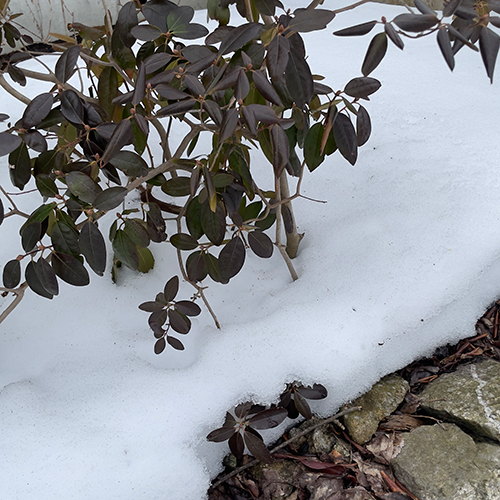
It may surprise you to know that snow, although bothersome to shovel on your sidewalks and driveway, can be quite beneficial for your garden. When a layer of snow covers a bed, the soil is protected from the harsh winds and low temperatures that often follow winter storms. With nighttime temperatures in my winter world this year sometimes dropping to near 0oF (-18C) and winds blowing up to 30 or 40mph, the ground can quickly freeze quite deeply. But with a layer of insulating snow covering the soil, the frost doesn’t penetrate very far, enabling the beds to be tilled much sooner in spring.
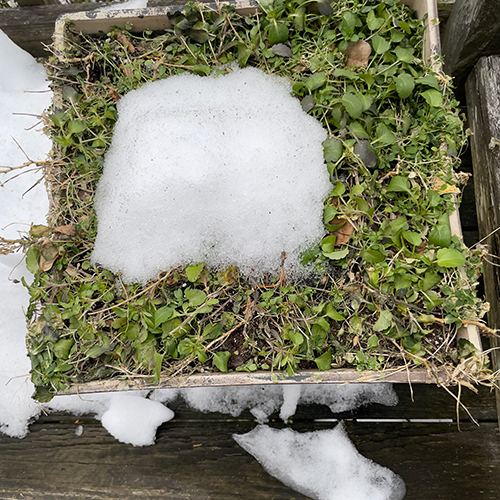
Snow can also protect plants that are buried beneath it. A deep layer of the white stuff helps to protect roots and virtually eliminates the “frost heave” that can lift entire plants out of the ground when it repeatedly freezes and thaws. In addition, a layer of snow can protect a plant’s above-ground stems and leaves by providing a layer of insulation from the even colder air. The pot of pansies outside my greenhouse was buried in a thick layer of snow for more than a month of extremely cold temperatures, but as you can see in the picture, the snow is melting and the plants seem to be recovering.
A layer of snow helps to add more water to the soil as well. In a heavy rainstorm that lasts most of a day, as winter snowstorms tend to do, the precipitation may run off quickly and wash nutrients out of the soil. A layer of snow, in contrast, by melting slowly, allows water to penetrate the soil deeply and not strip away nutrients. This may be why some gardeners say that snow leaves their soil richer in nitrogen. I’m a bit doubtful of that claim, however. As far as I know, water is still H2O with no N in it.
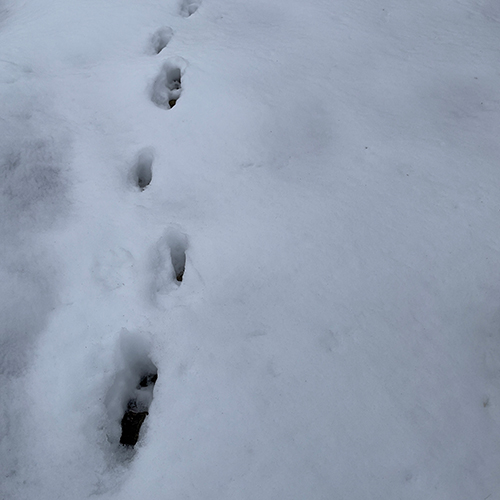
In addition to being beneficial to your garden, snow can also give you a good idea of what animals are visiting your yard while you’re asleep or otherwise not paying attention. In my snow-covered yard, I’ve seen the tracks of rabbits, squirrels, deer (including a mother and two fawns), and possibly a coyote. A few days ago, I also saw a black mink running across the white snow. But I’m pleased to note that none of the tracks go through my carefully fenced-off vegetable garden.