




On dull days – and in dark times – snowdrops never fail to lift the spirits. Plant, sow, divide and share them, and light up Februarys to come!
Envy alert: I’ve had a fabulous February. We’ve been blessed with an unusually dry January and February here in North Wales, though we haven’t escaped a run of persistently, dull, grey, damp and cold days; much of the time it’s felt like an all-day-long gloaming. But it’s been near-perfect for the one plant that drags us gardeners kicking and screaming from our winter sloth: snowdrops.
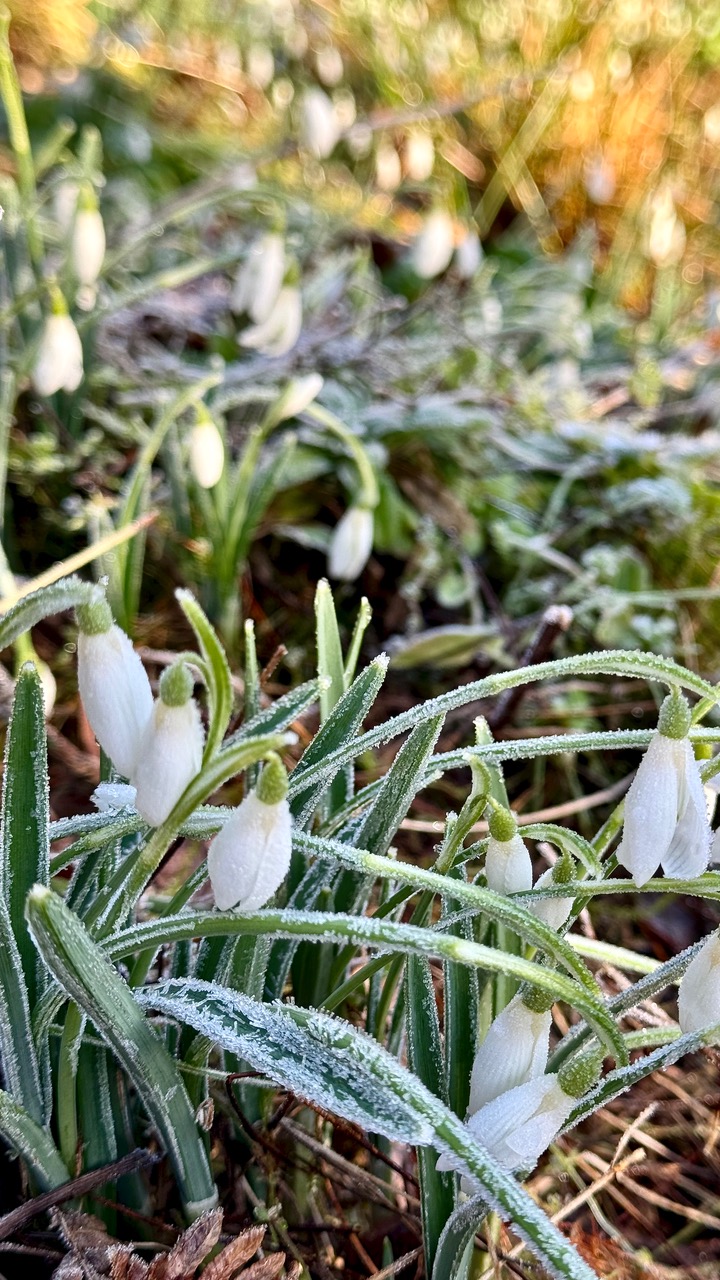
Galanthus nivalis – the common or wild snowdrop – thrives here on the wild banks below the garden, which has infused my February with fabulousness. After a frustratingly fast-shooting pre-Christmas start due to mild weather, a colder new year slowed their progress down. The first specks of white showed in early January and have gently built to what I coin ‘peak snowdrop’, which is happening now (‘peak primrose’ isn’t far off). Cold, steady progress not only prolongs their show, it keeps molluscs at bay.
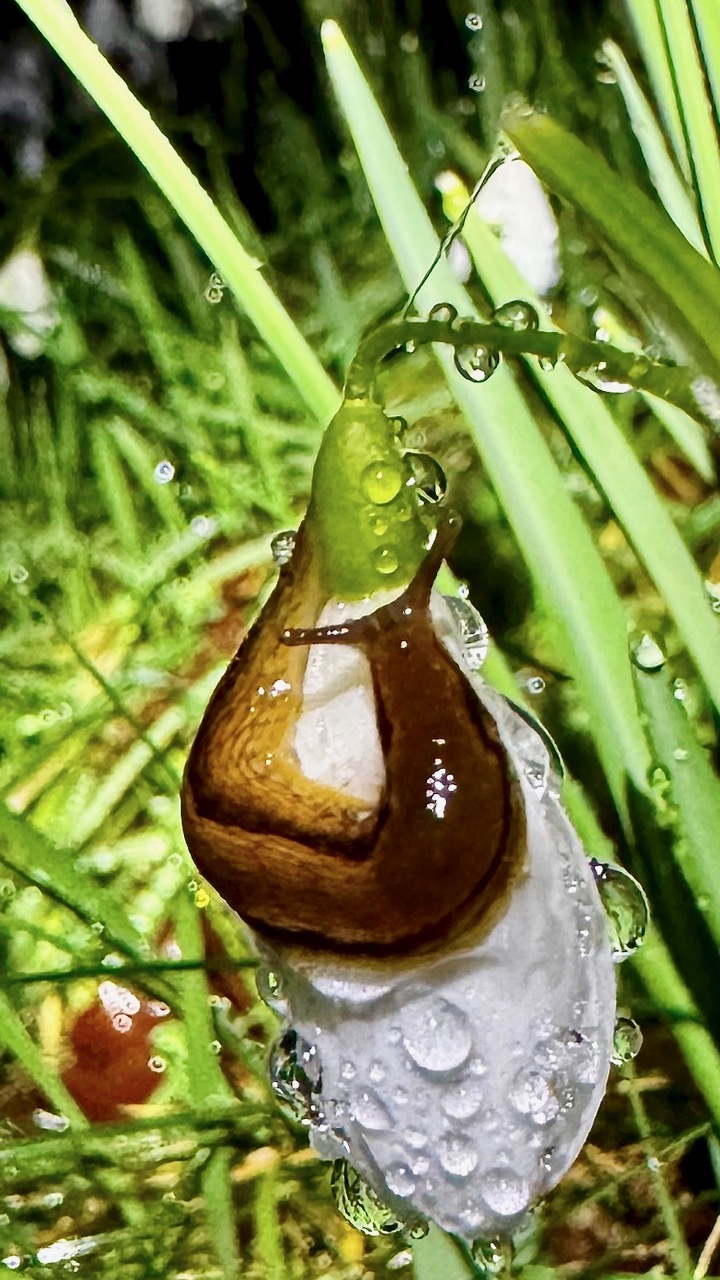
On the odd wet days when we’ve nudged 10˚C, nocturnal, snowdrop-devouring slugs were on the move, and I prayed for frost to send them packing. The upside of mild days is the sweet honey scent that snowdrops exude as their tight bells open out, drawing in the first few brave wild and honey bees. Those honey-infused days are sheer joy; their price is faster-fading blooms.
A public footpath skirts the garden, so others get to enjoy sweet peak snowdrop, too. That leads to admiration – my patches number several thousand blooms descended from the hundreds of bulbs I planted 20 years ago – and to conversation around tips on growing, buying, planting and dividing. No neighbour resists being stopped in their hurried tracks to drink in some drops. They lift us and connect us at a time of year when it’s all too easy to drown in lightless gloom.
Although they’ve hardly been lit up by crisp, low winter sunlight, my snowdrops were transformed one night by something quite magical: moonlight. The last full moon, shining down though a spectral, heavy mist, transformed my snowdrop-clad banks into a lunar-lit show. I stood transfixed, awed until the evening chill broke my spell – and I grabbed my iPhone. I’m a point-and-shoot kind of photographer, so I pointed and shot, using only moonglow to light the moment. Phone cameras are now astonishingly sophisticated, and I was amazed by the albeit rather dishonest results (the camera never quite sees what our eye does, but the results can often be impressive). You can judge for yourself.
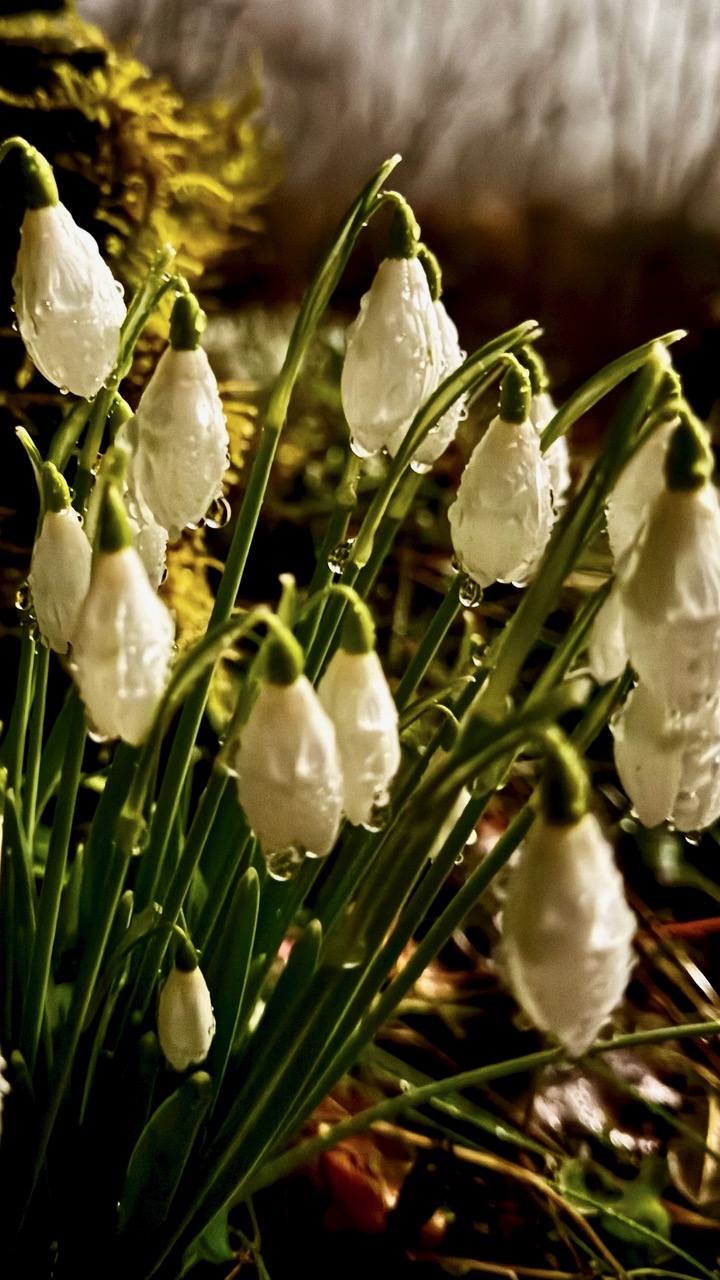
My snowdrops then went on a joy-giving journey – around the internet via social media. I try to contribute to a weekly online hour (every Sunday at 8pm using #wildflowerhour) of sharing pictures of wildflowers in bloom that week. I posted my moonlit snowdrops, and they gained hundreds of likes and shares among other wildflower lovers, over several days. I was chuffed that they struck such a chord, clearly bringing joy to hundreds of flower-lovers amid this dark late winter. Sharing a bit of uplifting flower power felt rather fabulous.
Even more fab was that I then became obsessed with my snowdrops, and wanted to get to know them better, to see them with fresh eyes – aided by the wizardry of my phone camera. I’ve spent many a chilly, knee-soaked hour exploring my snowdrops from every which way, which let me see past their coy, nodding nature into their truly beautiful, three-of-everything hearts.
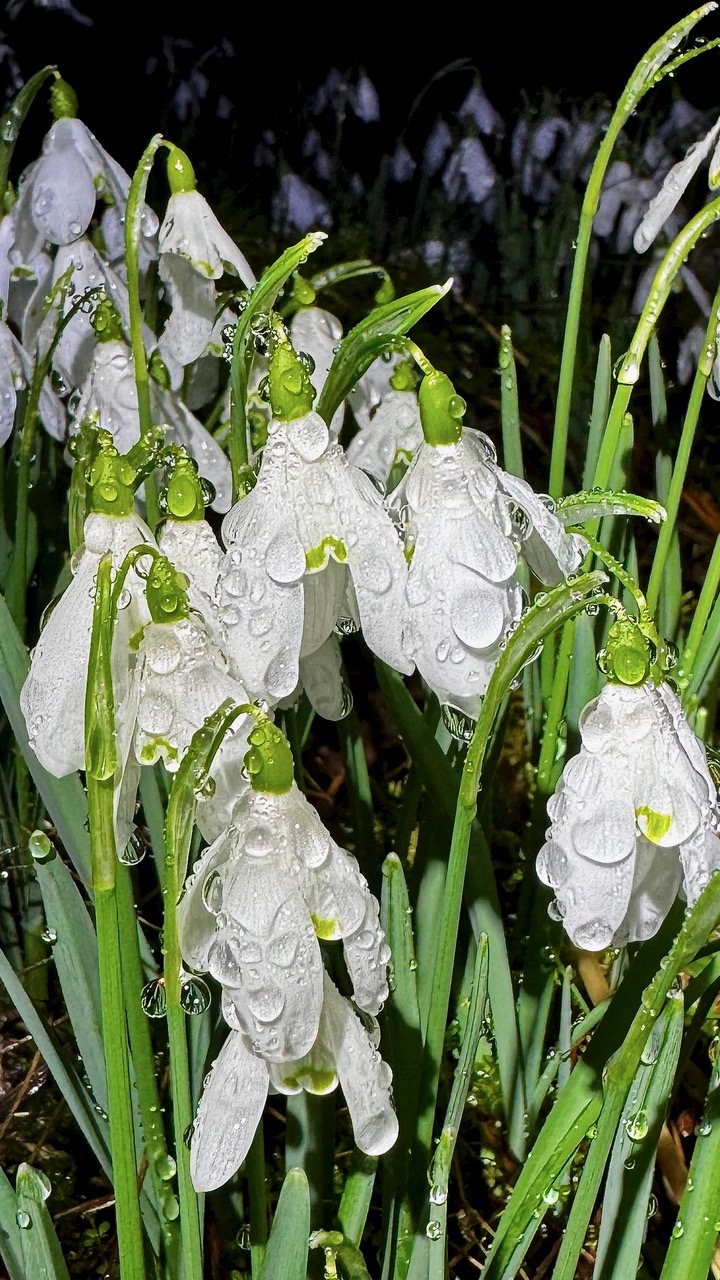
All I had to do, apart from mastering a steady hand, was look up – or rather shoot up – using the phone camera, to take a vole’s-eye view. This takes some figuring out, because camera lenses are on the back of phones, and the viewfinder is on the front… but I cracked it and gathered some truly, er, fab shots, revealing snowdrops’ subtle beauty, which I’ve not fully appreciated before. Not wanting to brag, but these shots proved to be joy-givers, too.
(If you do one thing with your smartphone as our gardens fill with flowers, try taking pictures up, up, up into any shy, nodding blooms. You’ll be amazed at what you discover.)
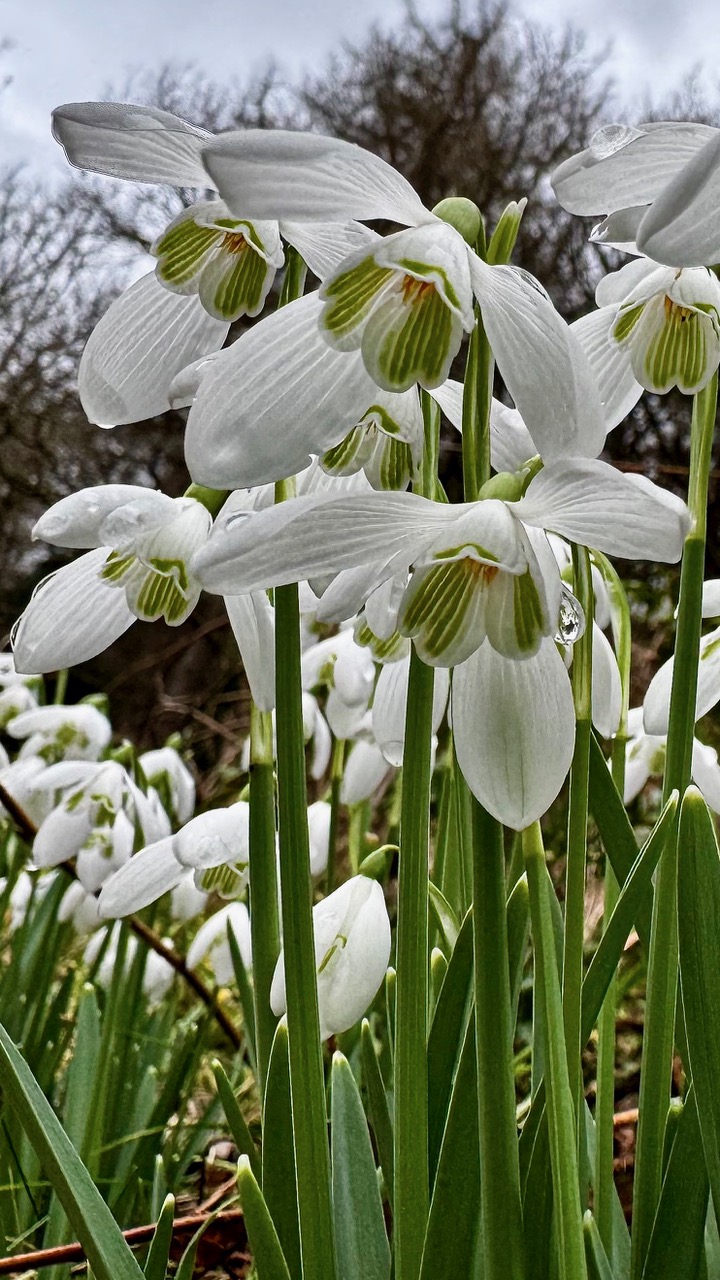
The joyousness only got better. I shared my best vole’s-eye snowdrop view with a friend, whose mother happened to be poorly in hospital, having a tough, anxious time. Unbeknown to me, a little Galanthus alchemy found its way to her bedside, via my friend’s phone. Showing his mum my pictures of the intricate beauty of snowdrops, seen from below, helped shift her focus away from her medical woes, to imagine she was a vole herself, peering up into the yellow-centred blooms. It was calming, soothing, steadying: a joyous example of the unexpected – and perhaps as yet untapped and limitless – power of plants to heal. It helped make my February fantastic.
Perhaps we need live webcams beaming the beauty, calm and hope from our gardens into places of fear, worry, and doom and gloom (especially in winter).
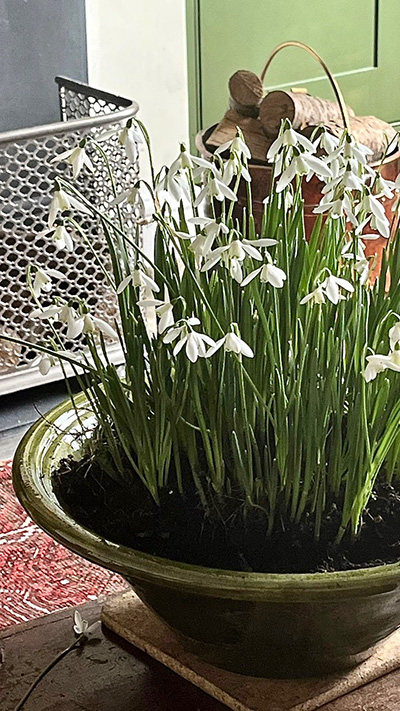
A year ago, I sent a friend a parcel of in-the-green snowdrops to power up her own patch. Some never got planted, but got potted up instead. Delight arrived in a picture of a bowl of ‘my’ drops in full bloom in her living room, honeyed with scent – and she gets to view like a vole, too. Another connection. Ephemeral beauty. Sheer joy.
So here’s your envy-busting snowdrop checklist. Buy them – now, as in-the-green plants (don’t bother with dry bulbs). Divide big clumps, and plant them (in smaller clumps), or sow them when the seed pods turn yellow (don’t remove the pods), or let them self-sow. Barter, beg, give and receive them – but get some! All that’s left then is to adore them, and be beguiled.
I guarantee you’ll have the most fabulous, joyous Februarys ever, whatever our wobbly weather.
Words and images © John Walker
Find John on X @earthFgardener