




January weather presses close to the greenhouse, with frost on the panes and the quiet threat of colder nights yet to come. Outside, the garden is holding its breath. Frost feathers the edges of leaves, the soil rings hard underfoot, and the light has that pale, slanted quality that belongs only to midwinter. This is the month when cold settles in for the long haul, and when sudden cold snaps can arrive sneakily, wreaking havoc overnight.
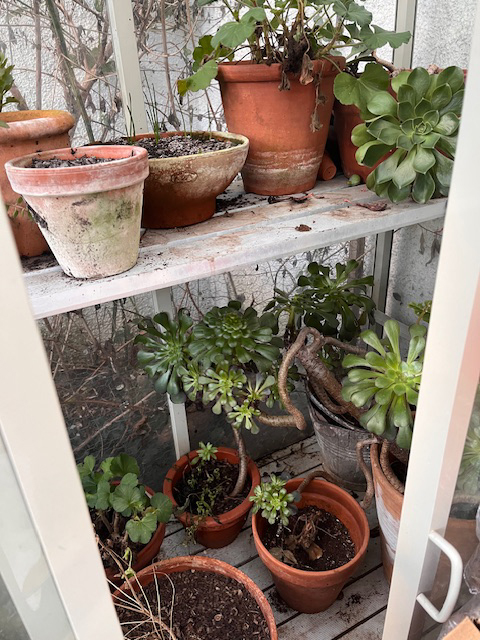
I did not properly line my greenhouse in bubblewrap this winter and haven’t for a few years. It has not felt so necessary, perhaps partly as I have fewer semi-tender plants than I once had and partly because of milder winters. But a cold snap has come in and it is making me worry for the plants I do have out there under cover, the pelargoniums and aeoniums and other succulents that usually soldier on through, emerging in spring looking ropey but alive and ready to allow summer to bring them back their glorious selves. This January cold-snap protection is less about the grand gesture of the full-body bubblewrap and more about responding to the weather as it comes, and focusing my efforts where they matter most.
One of the most effective short-term strategies is to protect individual plants rather than the whole structure. Tender plants, young seedlings, citrus, pelargoniums, chillies, or anything you’ve been nursing through the winter—can be wrapped directly. A layer of horticultural fleece is often enough, but in a pinch, old cotton sheets, pillowcases, or even newspaper can help trap a pocket of warmer air around a plant. The key is to keep the covering loose, allowing some airflow while preventing frost from settling directly on leaves.
At night, when temperatures are forecast to dip sharply, grouping plants together can make a surprising difference. Plants give off a small amount of heat, and when clustered, they create a shared microclimate. I often move my most vulnerable pots to the centre of the greenhouse, away from the glass, which is where cold penetrates most easily. Raising pots off the floor, onto shelves, bricks, or overturned trays also helps, as cold sinks and lingers at ground level.
For those with small or mini greenhouses, flexibility is your greatest advantage. On especially cold nights, throwing an old blanket, duvet, or thick fleece over the entire structure can significantly reduce heat loss. This works best as a temporary, overnight solution: put it on at dusk and remove it in the morning to let in light and prevent excess moisture build-up. Pegs or weights can help keep coverings in place if the wind picks up, though the coldest snaps are often windless.
Inside the greenhouse, thermal mass is another quiet ally. Water barrels, buckets, or even recycled plastic bottles filled with water absorb heat during the day and release it slowly overnight. While this won’t save plants in a hard freeze on its own, combined with fleece or targeted covering it can soften the extremes and buy you a few precious degrees.
And don’t overlook the importance of dryness. Cold, wet compost chills roots far more than cold, dry compost. Water sparingly during cold periods, ideally in the morning, so excess moisture can be absorbed or can evaporate before nightfall. Good ventilation on milder days is also essential, stale, damp air encourages mould and rot, which can be just as damaging as frost.
Finally, pay attention to the forecast and act early. Even a single night of -3°C can undo months of careful overwintering. Having fleece, blankets, and clips ready to hand means you can respond quickly when a cold snap is announced, rather than scrambling in the dark with numb fingers and regret.
January may feel quiet and restrained in the garden, but it is not lifeless. With a little vigilance and some well-timed protection, your greenhouse can help your plants safely through the cold, waiting with them for the light to return.