




I spotted them on a grey February morning on my way down to the greenhouse: the first tiny, rounded mint leaves pushing up in one of my pots. Nothing dramatic — just a hint of green, barely the size of my fingernail — but enough to stop me in my tracks. Mint is waking. February is like that, cold and grey but with little signs everywhere that make your mind jump ahead to the coming growing season, to warm days in the greenhouse, to scissors snipping herbs for supper. As a month it is quiet and restrained, but full of promise.
If you’re standing in your greenhouse right now wondering what on earth you should be doing with herbs in February, the honest answer is: not a huge amount. This is a planning month as much as a sowing one. A time for tidying, dreaming, ordering seeds, and gently nudging a few things into life rather than rushing headlong into growth.
Planning the herb year ahead
February is perfect for taking stock. Which herbs did well last year? Which sulked? Which ones did you mean to grow but never quite got round to? I like to sit with a notebook and a mug of tea and sketch out where things might live this year — greenhouse shelves, staging, pots just outside the door, or tucked against the warm glass.
This is also prime seed-buying season. Many herbs are best sown little and often, so it’s worth checking dates and quantities now. Parsley, coriander, dill, basil, chervil and summer savoury are all herbs you should grow from fresh seed, so chuck out last year’s old packets and order new.
Herbs you can start in the greenhouse in February
While patience is key, there are a few gentle beginnings you can make under glass this month, especially if your greenhouse stays frost-free or you can add a bit of protection.
Parsley is a classic February sow. It’s slow to germinate, so an early start makes sense. Sow into deep pots or root trainers, parsley hates having its roots disturbed, and keep the compost just moist, not cold and wet.
Chervil and coriander can also be sown now if you have a cool but protected greenhouse. They don’t love heat, so February conditions suit them well. Coriander in particular appreciates being sown in situ in its final container.
You might also sow early dill or summer savoury in small quantities, treating them as an experiment rather than a commitment.
Looking after overwintered herbs
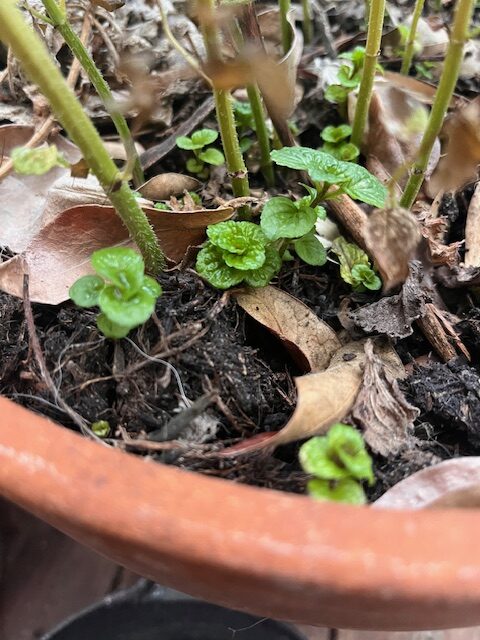
Many of us have pots of herbs that have spent winter tucked in the greenhouse or just inside the door. February is a good time to check them over. Remove dead growth, clear fallen leaves from the compost surface, and resist the urge to feed too early. A light trim of rosemary, thyme, or sage can help keep plants tidy, but don’t cut into hard, woody growth.
If you spot signs of life — like my mint — take it as encouragement, not a green light to rush. Growth is fragile at this time of year, and cold nights can still undo your optimism.
Just outside the greenhouse: sheltered perennial jobs
That strip of ground right next to my greenhouse glass is a little pocket of warmth, sheltered from wind and frost. February is a lovely time to work here, especially with perennial herbs.
If the soil isn’t frozen or waterlogged, you can plant bare-root or potted perennial herbs such as thyme, oregano, marjoram, sage, and mint (in containers — always in containers!) in such spots.
Established clumps of chives can be lifted and divided now, then replanted in smaller sections. They’re tough as old boots and will reward you early.
Maintenance, not momentum
February herb gardening is about restraint. Clean pots. Label trays. Check fleece, bubble wrap, or insulation is still doing its job. On bright days, remember to ventilate the greenhouse — herbs hate stale, damp air even more than they dislike cold.
And perhaps most importantly: enjoy the anticipation of a summer of crushed and chopped leaves, of aromatic salads and garnishes. Those little mint leaves did that for me. They don’t mean spring has arrived, just that it is thinking about it. And so, it seems, should we.