


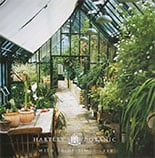

It’s been an interesting growing season this year. First, I had to spend some time repairing my two greenhouses after a spring storm did damage to both. This damage resulted in a slight shifting of some of the larger panes of glass, causing leaks in the overhead. Hopefully, the caulking done will provide a permanent fix.
Not only did my greenhouses suffer damage this year, but I did too quite recently. While picking up some branches blocking the path of my lawn tractor, I tripped over a root and broke a hip. Needless to say, this mishap put a damper on my fall gardening plans. But with the help of one of my sons and a few friends, all my patio plants have been moved back into their wintertime heated greenhouse home, avoiding the frost that will soon be arriving. So that greenhouse is now packed with plants, and the heater is ready to go.
As for what my greenhouses have yielded this year, I picked the first three olives from my eight-year–old greenhouse–grown olive tree. Frankly, I’ve never tasted anything so intensely bitter! But I’ve now learned that this is because freshly picked olives contain an extremely bitter compound called oleuropein that’s evolved as a defense to inhibit animals from eating the fruit off the trees. To make fresh olives eatable, they must first be cured to extract or break down the oleuropein. So if my three olives this year become many more next year, I’ll find out what this curing process entails. Then perhaps I can make some olive oil – at least a half a teaspoonful!
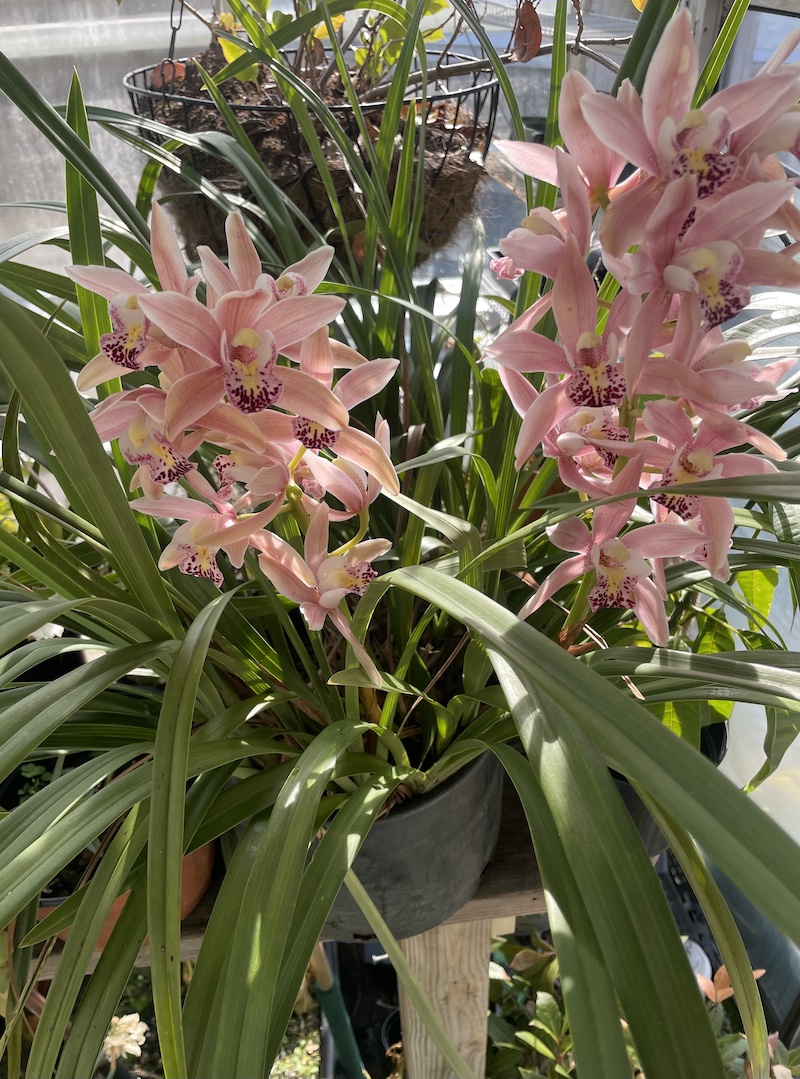
One of the big greenhouse success stories has been the cymbidium orchids. I began about ten years ago with four plants. After each flowered, I divided and repotted it. And so the process continued year after year until I now have 22 plants! Not all will flower this winter, but there should be a very attractive display in late January or early February when little else is blooming.
Another orchid that flowers beautifully each year is my Dendrobium, which I believe is a Dendrobium kingianum. Given to me when it outgrew its former owner, it’s now almost rootbound in an 18-inch-diameter pot. This Dendrobium has abundant leaves and, after a cold winter, will have lots of flowers too. When I move it, many small pieces fall off, which are easily repotted, so I now have quite a few small plantlets.
My Phalaenopsis orchids have finished blooming and are now in a resting state. Over the winter, I’ll keep them indoors where it’s warmer – around 65°F at night, with higher temperatures on sunny days. These plants provided magnificent blooms all summer long.
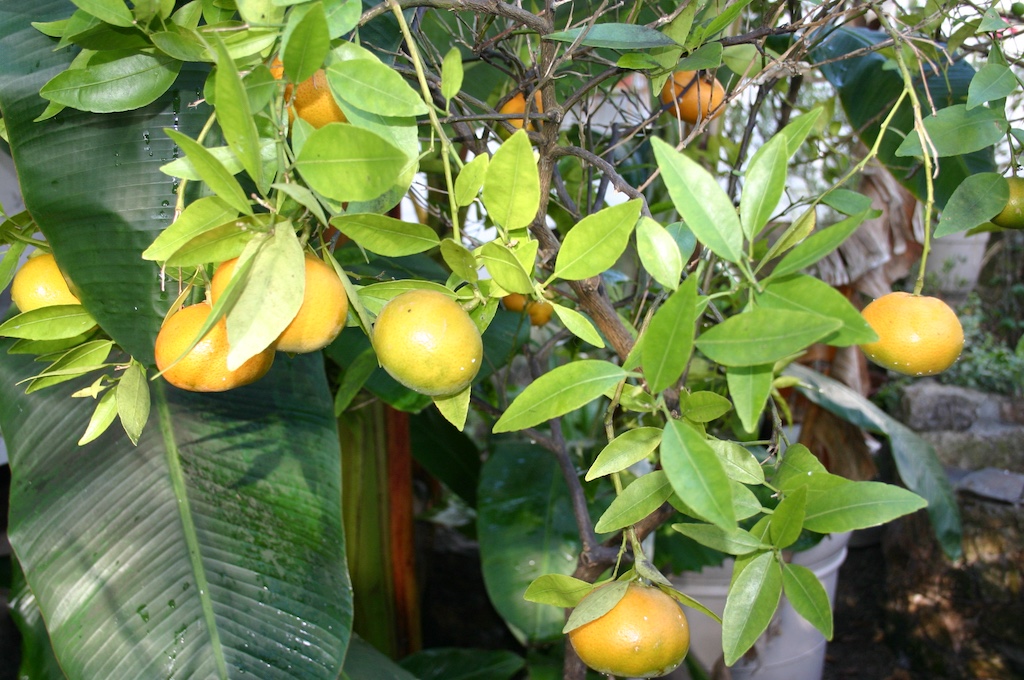
My citrus trees have provided a fair number of lemons and limes, although potted treesdon’t usually produce as much fruit as those grown in outdoor soil. However, for making lemon squares or lemon cake where the zest is used, my fruits have never been sprayed with fungicides or eatable waxes like those sold in stores.
And last but actually best of all is my Peter’s Honey fig tree, which is planted in the ground in my unheated greenhouse. This year it’s produced a magnificent crop of figs. Not only have I had enough figs to make a very tasty jam, but I’ve had plenty more to give away to friends. This gift-giving of what you grow is part of the joy of greenhouse gardening.