




As a writer I plough a lonely furrow, sitting at home in my study day after day. I’m lashed to my desk, like a female Odysseus being prevented from the Siren call of the garden just beyond the window. I get a constant urge to dash outside and abandon the task in hand, even in November, probably the dreariest month of the gardening year. That’s why I welcome the chance talk to garden societies, because I enjoy the human interaction after solitary months spent gardening and writing.
When I’m doing talks, I’m often asked to draw the raffle and judge the flower of the month. The latter can be a tricky task, for members vie to be the best. Last month I chose an ornamental hawthorn, with round orange haws reminiscent of small mandarin oranges in a silver bowl. I ignored the enormous lemon-scented magnolia, the huge shaggy-petalled pink dahlia and the coppery red hesperantha. Instead, I chose the fruiting ornamental tree because it summed up the season perfectly.
I know why I gave the hawthorn First Prize. I used to grow the Oriental thorn, Crataegus laciniata, in my dry Hook Norton garden and it was a delight. This small, slow-growing tree provided a light spreading canopy of green leaves with silvery undersides. The clusters of cream bee-friendly hawthorn blossom appeared in spring. Then small round fruits, resembling miniature pippin apples, lit up autumn. In winter the grey trunk and bark added even more interest. The poor Hook Norton soil and dry climate didn’t bother the oriental hawthorn one jot, because this hawthorn is found naturally in West Asia and in S. E Europe, including Sicily, Morocco, Algeria and Spain. I predict we’ll all be growing more drought-tolerant trees in the future, to cast some overhead shade in our increasingly hotter summers. The similar C. schraderiana, a native of Greece, provides purple-red fruits, but I prefer the golden to coral-red fruits of C. laciniata. They shout autumn’s here.

Why did I ignore the flowers on the table? Well late autumn’s not really about flowers. It’s all about fruits and seedheads and they can look glorious as the days shorten. The wild rose hips round my study window frame the apple tree, its branches bent by the sheer weight of fruit that must be picked – but not today. There are grasses too, the favourite being the Himalayan Miscanthus nepalensis, an Afghan hound of a grass with golden heads that sway. It’s Himalayan, as the name suggests, and that has implications for the gardener. Himalayan plants thrive cold dry winters, followed by damp, warm summers. The British climate provides the exact opposite, especially now that climate change is upon us.
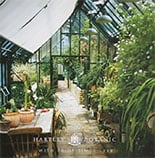
This magnificent grass needs spring and summer moisture to thrive. That was in short supply for many of us this year. In winter, the plant needs dry roots, so the way ahead is to treat it like an agapanthus and place it in large pot. Take it under cover in winter, so that it’s protected from heavy rain, and then bring it outside and water it in spring and summer. You can also place it in the lee of the house and that’s where my oldest plant lives. Tucked under the eaves. Others have been raised from seed, and they are also kept in my unheated Hartley greenhouse. The ones in the garden succumbed to the drought, but they may yet revive. Plants are more resilient than we give them credit for.
Bottle-brushed pennisetums also tend to go AWOL in our cold, wet winters up here, for we are some 700ft above sea level. They can be overwintered in the same way, in large moveable containers. These tactile bottle-brushed plants need a warm, sunny position to flower well and they also need good drainage. I admire Pennisetum alopecuroides ‘Cassian’s Choice’ and I first saw it at the autumn version of the Chelsea Flower Show held in September 2021. Charlotte Edwards and Hugo Bugg were the only designers brave enough to use the same key plants they’d chosen for the cancelled May show. The finely-tined foliage has developed golden highlights and the fluffy brown heads, as bristled as hairy bear caterpillars, had faded to shades of beige and ochre.

The star plant in that garden was Amsonia tabernaemontana. The dark stems, narrow black seedpods and yellow foliage looked wonderful in the September sun and these two were supported by dainty small-flowered asters. More gardeners should grow the Eastern bluestar, because this drought-tolerant North American plant offers months of interest. It’s a slow-fuse plant, so many nurseries avoid growing it and consequently it’s hard to find. In late spring the black shoots emerge and race away, with all the speed of black asparagus spears, although don’t consume them! Within days the sultry stems are cloaked in narrow green leaves and then a cluster of slate-blue starry flowers appears by May. I like to combine this Geum ‘Totally Tangerine’. Ignore the commonly grown ‘Blue Ice’. It’s too blue and too short, so it doesn’t billow and flow.
At Chelsea it mingled with Pennisetum alopecuroides ‘Cassian’s Choice’ and small-flowered asters. Pennisetums are tricky for me here, as I’ve said, and I am also struggling to grow the Korean Feather Reed Grass, Calamagrostis brachytricha. Summers are normally too dry, and there is no water table in high-altitude gardens like mine. Asian grasses and Asian plants enjoy a rainy season in their native land, so most are thirsty customers. It’s a shame, because the feathery plumes of C. brachytricha have a purple-pink sheen when they open, so they tone in with autumn asters beautifully.

I can just about see the silvery plumes of the pampas grass, Cortaderia selloana, if I lean to the right and almost fall out of my chair. These silky exclamation marks appeared in mid-September above an arching fountain of green and cream variegated leaf. Mine is called ‘Silver Feather’, a sport of the more available ‘Pumila’. These both reach seven feet in height and they offer months of architectural interest. The dense understorey also shelters wildlife, so we often get a hibernating hedgehog bedding down in the base. Voles, which are enjoying the windfall apples, saunter out of the clump too. I expect they will soon move on to my crocuses and trilliums!
It is one of the most admired plants in the garden, so it’s a shame that associated with bungalow lawns and that’s all I intend to say. Google swingers, it if you must! As winter proper nears, the most noticeable plants will have rich-green foliage because this colour majors in midwinter. I hardly notice the box balls in summer, although the box moth caterpillar doesn’t have any trouble. My birds help me out though, particularly my wrens and blackbirds, so damage control of a sorts is in place. There are no chemicals allowed here!

Green glows in the quieter months of the year and the main source in the garden just now is a hardy fern named Polypodium cambricum. Polypodium translates as multi-footed so these ferns spread and form clumps through stolons. They are summer dormant, so the foliage fades in spring and the new fronds emerge in September, usually after the first heavy rainfall of late summer. My many polypodies have all returned, despite the drought, and they will look glorious throughout winter. The best is ‘Richard Kayse’, named after the Bristolian gentleman who collected it from a high stone cliff in Dinas Powys in 1668.
Polypodies do well under shrubs and they propagate easily if divided in September, just when they’re just breaking dormancy. Old Court Nurseries near Malvern have a Plant Heritage Collection and they are, or will be, a good source of different polypodies because their fronds vary. They’re going to be a real winter warmer as well.