




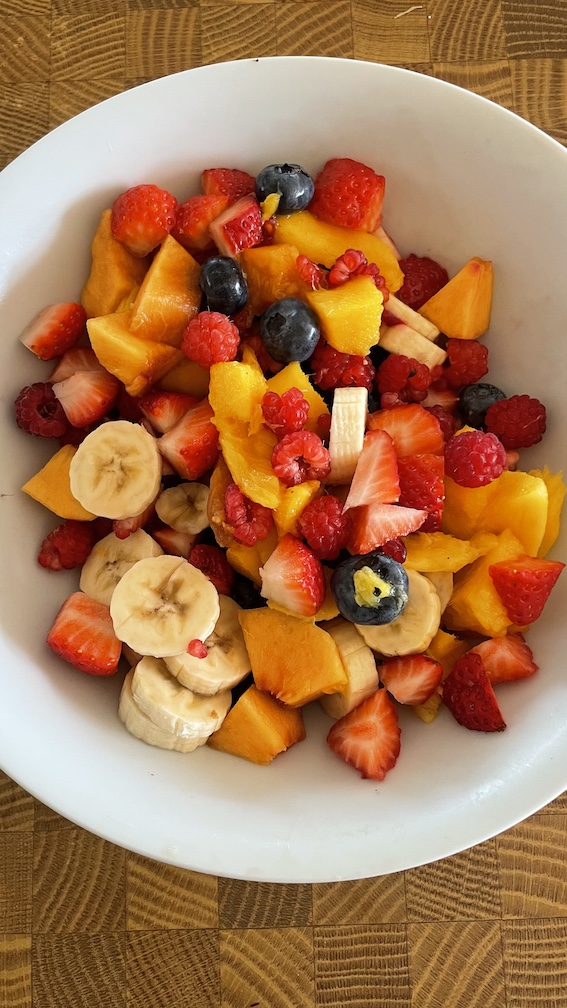
It’s berry season here in Rhode Island. The raspberries, blueberries, red and white currants are all ripe and ready to be picked. Strawberries have almost finished. In a few weeks blackberries will also be available. These berry plants produce several pounds of fruit each season, most of which goes into the freezer for pies, smoothies and fruit drinks.
My blueberry plants produce early, mid and late season berries, giving us a six- to seven-week harvest period. Each year, old non-producing stems are cut out, leaving large plants that get fed with about a cup of Aluminium Sulphate in spring, just before it rains. In mid-to-late June the bushes are covered with netting to keep squirrels, birds and other fruit gobbling animals out.
Raspberries are treated slightly differently. Each year new shoots come up, usually in places where they should not be. In winter, before the ground freezes, I move these shoots into rows. At this time, the old dark brown canes are pruned out at ground level.
The new crop of canes are left to grow until they are about 4’ (1.2 M) tall, then the top 6” to10” (15 to 25cm) of each cane is clipped off. This forces each cane into growing multiple stalks near the top. Each stalk usually has many more slightly smaller berries.
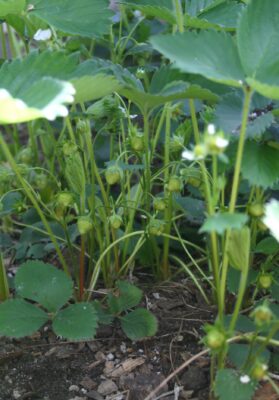
My currant plants are a relatively new addition and have only produced berries for two seasons. The white and red berries are best used in pies as there are not yet enough to make jams or jellies. I love black currants but cannot grow them in the state of Rhode Island because they are an alternate host for black pine blister rust, although I read that there are now immune varieties. Maybe next spring!
Blackberries have a mind of their own. They grow where they want, usually in a spot where they can snag clothes as you walk near! Fortunately, around here, blackberries can be foraged (if you get up early enough!), but they can also be grown in the garden. Blackberries are produced on canes that grew last year, so if you have them growing, only prune out the vines that have fruited this year. They will regrow, usually in places where they are not wanted, so don’t be afraid to dig them out. I’ve been trying for about thirty years and have not succeeded!
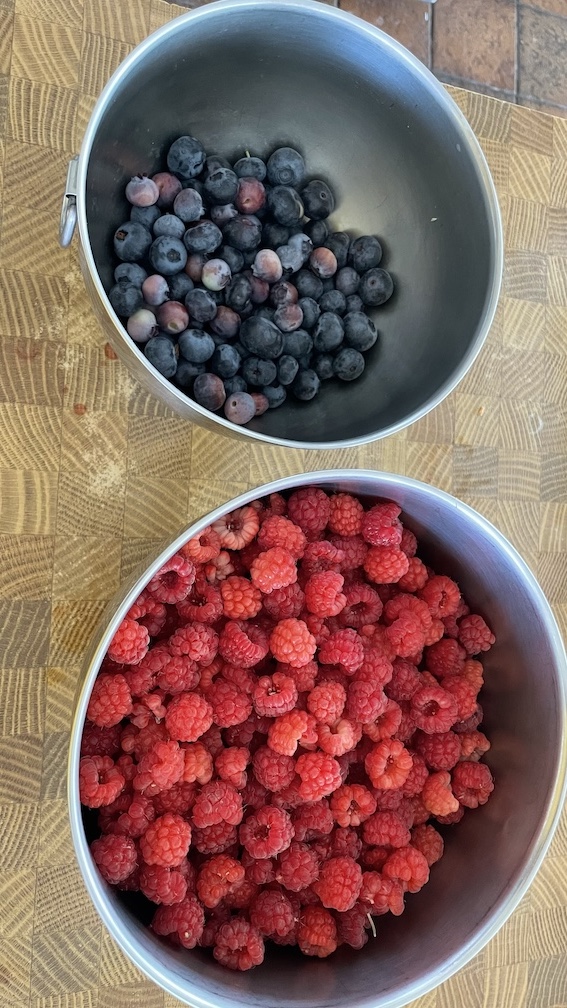
Strawberries are another easy to grow crop with tasty rewards. Professional growers mound up the soil, cover it with plastic to keep the berries clean and water with irrigation lines under the plastic. Home growers can do the same, but I don’t find plastic necessary except for weed control. Strawberry plants should be fertilized when the plants set flowers. During the growing season your plants should be watered daily. You will probably have to protect your new berries against birds and animals, but this can be done with netting.
Most varieties produce new plants on runners after the picking season is over. Let the runner produce a strong root before replanting. If you try to move it too early the roots may not ‘take’ and the new plant may die. I usually wait until the end of summer to replant.
Berries, then, are a wonderful addition to the garden, but only if you protect them from birds and animals, don’t get thorns in you and can pick them on hot, sunny, humid days.