




In a greenhouse, plants can be grown that would never survive in the surrounding environment. Many aren’t just non-native plants. Some are exotic ones from far-away parts of the world, especially tropical regions. Growing such plants can be great fun, and not just because you’re defying the outdoor climate. The fruit of some offer grocery–store alternatives, including ones that may be hard to find in the typical supermarket. My focus here, though, is on growing what can be called edible tropical “staples,” meaning produce from distant regions that have become so common we don’t think of them as exotic.
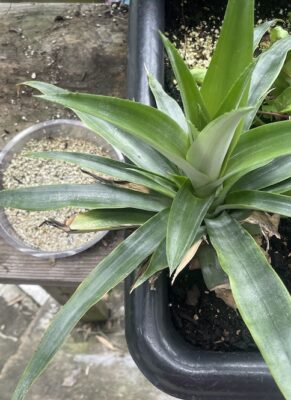
One is the pineapple. It’s actually not hard to grow in a greenhouse. Just cut off the crown of a store-bought pineapple, being sure to remove all the surrounding yellow flesh. Although some people simply put the stalk in water, I put mine in a container of perlite mixed with water and a touch of fertilizer. Soon small roots began to appear. When the roots were reasonably long, I planted the stalk in potting soil. Although the plant only has new leaves so far, a new stalk will ultimately sprout in the middle of the crown, at the top of which a small new pineapple will form.
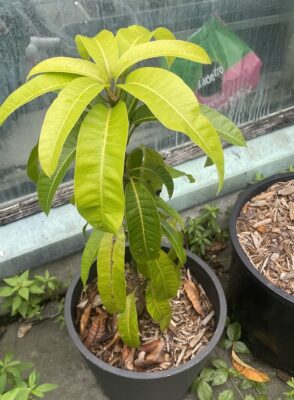
Another tropical staple you can grow in a greenhouse is the mango. You can grow any mango, but many store bought mangoes are hybrids and may not come true to the parent. Of the many varieties of mangos, I’ve found that the best for growing from seed is the Ataulfo, sometimes called the honey or champagne mango. First eat the mango (the best part!) and allow the central pit to dry. Then open the pit with a sharp knife, being careful not to cut the seed inside. Next, plant the seed in potting soil and set it in a warm place. About 65-70°F (18-21°C) will do. Keep the soil moist but not wet. In two to three weeks a shoot will emerge that will eventually form leaves. Now just wait for your new mango tree to grow big enough to set fruit. That wait, unfortunately, is about five to eight years!
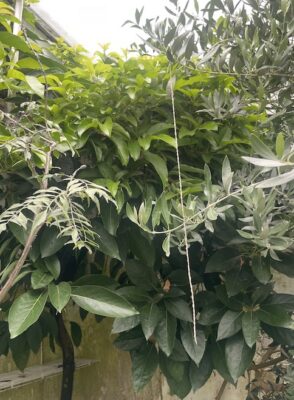
The avocado is a tropical staple that can also be grown from seed. Instructions on doing this can be easily found online. However, I’m told that an avocado tree grown from seed is often sterile and therefore won’t produce fruit, so a grafted tree is preferable. My grafted avocado tree is now ten years old and has grown so tall it’s pushing against the twelve-foot-high glass of the greenhouse roof, but it has yet to set fruit. I may have to deem it a hopeless cause if it doesn’t do so soon. Fortunately, while I’m waiting, I can use the edible leaves in some tasty Mexican dishes.
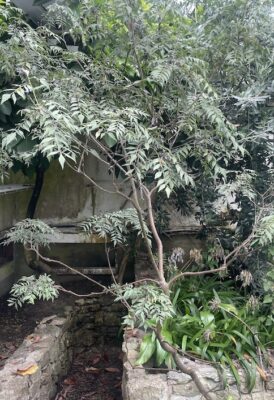
Turning to tropical spices instead of fruit, I have a curry leaf tree in my greenhouse. The leaves of this plant are a staple seasoning in Thai and Indian cuisine. My tree is now six to seven feet tall and blooms every year. The blooms produce little black berries from which I’ve successfully grown small new plants. Unfortunately, last year’s extremely cold winter killed off these new plants, but the mother tree survived. Hopefully, I can harvest this year’s berries and start new seedlings again. Such cycles can be part of the pleasure of growing tropical plants in a greenhouse.