


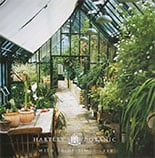

One of the first and most useful bits of advice I can offer a new homeowner was acquired with my first house, one of many late Victorian brick ‘terraces’ that lined a street in south London: “Good fences make good neighbors.” Today, that adage has proved its worth, supported by the research I did for my book Mid-Century Modern Gardens.
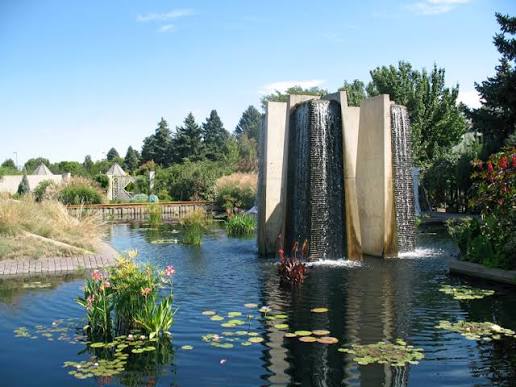
Living in the southwest USA in a street lined with mid-century modern houses, built c. 1958 as our town in the foothills of the Rockies expanded eastward, I found Garrett Eckbo’s book Home Landscape: the art of Home Landscaping, first published in 1958, especially relevant. Appearing at a time when tract housing and what he termed “Mass-production Neighborhoods” were expanding across the landscape, he described how necessary it was for neighbors to consider each other when planning their new landscape, no matter the size. “Neighbors Must Cooperate”, he titled the section, describing how enclosing one’s property was the first problem encountered when trying to attain this goal. It’s a difficult one to reach unless each party shares similar garden objectives, as Eckbo outlined in an introductory fable, of the homeowner whose aim of growing roses in a sunny spot was thwarted by his neighbor’s much-loved elm tree that cast deep shade on the proposed rose bed.
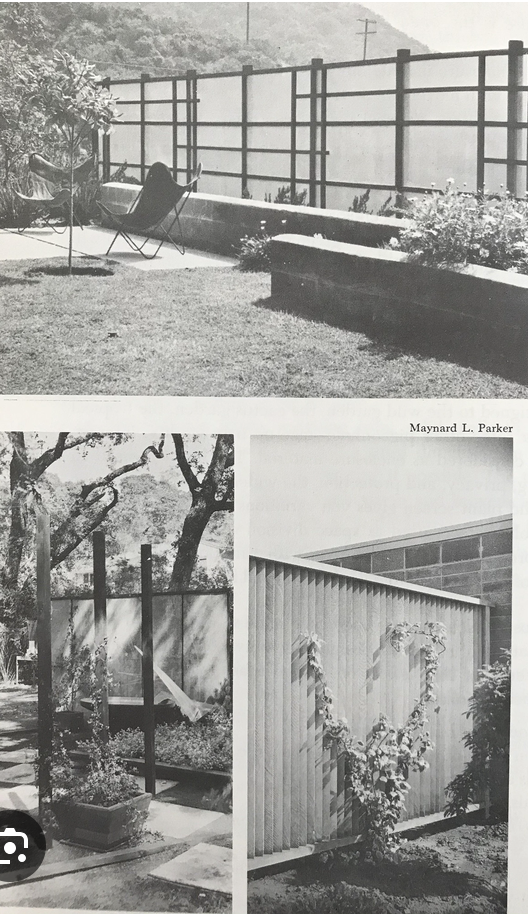
Fifty-eight years later, the problem persists; in my case, the ideal spot for a small greenhouse in my outdoor room is now in deep shade thanks to a Chinese elm (the blight of our city, a ‘trash’ tree seeding anywhere and everywhere) that my neighbor has granted sanctuary because she likes ‘green things’.
This controversy brought to mind a recent article from the American Society of Landscape Architects that described the planned “return of a park” to Park Avenue in New York city. This has given landscapers and garden lovers, environmentalists and supporters of the green cities movement great cause for joy, as the new vision plan, approved by the city’s Public Design Department, will create within one of the city’s main arteries a linear park, adding two acres of usable greenspace that will be home to 160 trees and a great many varied plants, primarily native and attractive to pollinators, down the center of Park Avenue complete with paths and benches set out along a central median.
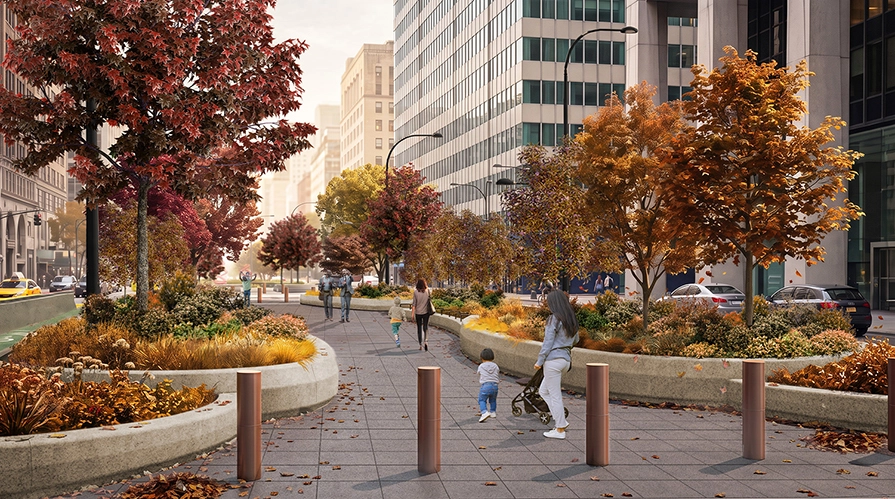
Designed by Starr Whitehouse Landscape Architects, the vision plan is to use “curvy, gentle, more feminine” planting beds to offset the towering blocks that form the Avenue’s urban canyon. Along one side of the new park a traffic lane will be replaced by a bicycle lane and an additional pedestrian walkway. New York has the Highline, now it will have, dare I say it, a low line — a stroll garden at ground level that will be an integral part of New York’s vibrant life. What New York’s cab and delivery drivers will make of the revitalized park aspect of this frantic thoroughfare remains to be seen.
However, coming down as I do on the side of greening our cities across the country and around the world, reconnecting us to our humanity by slowing our pace and giving us — and nature — a chance to breathe, can only be a good thing. To paraphrase novelist George Eliot, if one would grow more roses, one must first grow more trees (ie. do the hardwork first).
©Ethne Clarke, 2026
Learn more:
The recent article from the American Society of Landscape architects provides a good deal of detail about the Park Avenue landscaping vision proposed by Starr Whitehouse Landscape Architects.
https://www.asla.org/news-insights/dirt/the-park-is-returning-to-park-avenue?_zs=hUQhh&_zl=Ab6C5
A complete overview of the landscape proposed by Starr and the NYC planning review is here:
https://www.nyc.gov/html/dot/html/about/parkavenue.shtml
More about Garrett Eckbo’s work at Denver Botanic Garden is at the The Cultural Landscape Foundation’s website:
https://www.tclf.org/landscapes/denver-botanic-gardens
A review of my book Mid Century Modern Gardens:
https://www.gardenista.com/posts/required-reading-mid-century-modern-garden-ethne-clarke/